
- [email protected]
- Anamnagar Kathmandu

Nepal Company Share Purchase
12
Dec
Introduction to Company Share Purchase in Nepal
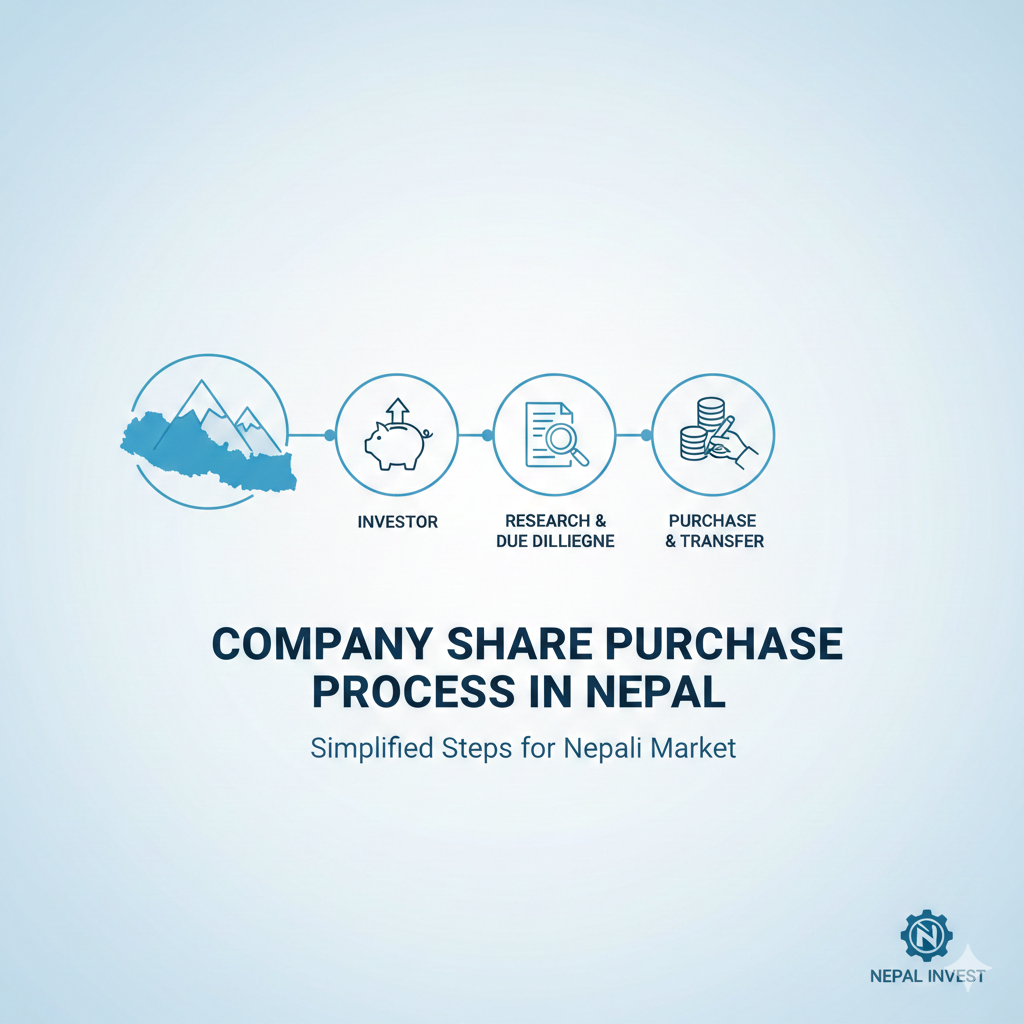
The company share purchase process in Nepal is governed by specific legal frameworks that require careful navigation. When shares of a company are purchased in Nepal, a series of legal procedures must be followed to ensure proper transfer of ownership. This comprehensive guide will walk through every step of the share purchase process in Nepal, from initial agreement to final registration.
In Nepal's growing economy, the acquisition of company shares has become increasingly common as both domestic and international investors seek opportunities. The legal framework for buying shares in Nepal is primarily regulated by the Companies Act, 2006 (2063 B.S.), the Securities Act, 2006 (2063 B.S.), and various regulations implemented by the Securities Board of Nepal (SEBON).
This guide will provide a detailed examination of the entire process, highlighting crucial legal requirements, documentation needs, and procedural steps that must be followed for a successful share transfer in Nepal.
Legal Framework for Share Purchase in Nepal
The company share purchase process in Nepal is governed by several key legislations and regulatory bodies:
| Legal Framework | Key Provisions | Relevance to Share Purchase |
|---|---|---|
| Companies Act, 2006 | Articles 83-89 | Governs share transfer procedures, share certificates, and registration requirements |
| Securities Act, 2006 | Sections 15-24 | Regulates securities trading, disclosure requirements, and investor protection |
| SEBON Regulations | Various | Implements rules for share purchase, disclosure, and market conduct |
| Nepal Stock Exchange Rules | Trading Rules | Provides procedures for share transactions through the stock exchange |
These legal frameworks establish the foundation for all share purchase transactions in Nepal, ensuring transparency, protecting investor rights, and maintaining market integrity.
The Securities Board of Nepal (SEBON) serves as the primary regulatory authority overseeing the share purchase process in Nepal, with the Office of the Company Registrar handling registration aspects and the Nepal Stock Exchange (NEPSE) facilitating market transactions.
Step-by-Step Share Purchase Process in Nepal
1. Due Diligence and Preliminary Negotiations
Before any company share purchase in Nepal is initiated, thorough due diligence must be conducted. This includes:
- Examination of the company's financial statements
- Review of legal compliance status
- Assessment of existing shareholding structure
- Verification of company registration documents
- Analysis of any encumbrances on shares
During this phase, the buyer and seller typically engage in preliminary negotiations regarding price, payment terms, and other conditions of the share purchase agreement in Nepal.
2. Drafting the Share Purchase Agreement
The share purchase agreement Nepal requires careful drafting to ensure all legal requirements are met. This agreement should include:
- Details of the parties involved
- Description of shares being transferred
- Purchase price and payment terms
- Representations and warranties
- Conditions precedent
- Closing arrangements
- Governing law and dispute resolution
The agreement must be executed on appropriate stamp paper as per the Nepalese Stamp Act to ensure legal validity.
3. Board and Shareholder Approvals
For the share transfer in Nepal to be valid, certain approvals must be obtained:
- The seller must obtain a board resolution approving the transfer
- The buyer's board may need to approve the acquisition
- In some cases, shareholder approval may be required, especially for substantial share transfers
These approvals must be documented and maintained as part of the transaction records.
4. Execution of Transfer Documents
The actual company share purchase process in Nepal requires execution of several key documents:
- Share transfer deed (Form SH-4)
- Share purchase agreement
- Board resolutions
- Share certificates (if physical)
- Other relevant documents as required by the company's articles of association
All documents must be properly signed, witnessed, and stamped according to Nepalese legal requirements.
5. Payment and Delivery
Upon completion of all documentation and satisfaction of conditions precedent:
- Payment is made by the buyer to the seller
- Share certificates are delivered to the buyer
- Receipts are obtained and documented
For dematerialized shares, the transfer is processed through the Central Depository System (CDS) of NEPSE.
6. Registration of Transfer
The final step in the share purchase process in Nepal involves registering the transfer:
- The company must be notified of the transfer
- The transfer must be registered in the company's register of members
- New share certificates must be issued (if applicable)
- The transfer must be filed with the Office of the Company Registrar within the prescribed timeframe
This registration is crucial as it legally recognizes the buyer as the new shareholder of the company.
Special Considerations for Foreign Investors
Foreign investors looking to engage in the company share purchase process in Nepal must consider additional requirements:
- Approval from the Department of Industry for certain sectors
- Compliance with foreign exchange regulations
- Restrictions on investment in specific industries
- Requirements for repatriation of profits
The Foreign Investment and Technology Transfer Act, 2019 (2075 B.S.) provides the primary framework for foreign share purchases in Nepal.
Tax Implications of Share Purchase in Nepal
The company share purchase in Nepal carries several tax considerations:
| Tax Type | Applicability | Rate |
|---|---|---|
| Capital Gains Tax | On profit from share sale | 5-10% depending on holding period |
| Stamp Duty | On share transfer instruments | Varies by transaction value |
| Securities Transaction Tax | On share transactions through NEPSE | 0.015% of transaction value |
| Income Tax | On dividends received | Varies by investor type |
Proper tax planning is essential to optimize the financial outcome of the share purchase transaction in Nepal.
Common Challenges in Share Purchase Process
Several challenges may be encountered during the company share purchase process in Nepal:
- Delays in obtaining necessary approvals
- Complexities in documentation requirements
- Issues with share certificate verification
- Discrepancies in company records
- Regulatory changes affecting the transaction
Understanding these potential challenges and preparing for them in advance can significantly streamline the share purchase process in Nepal.
Recent Developments in Nepal's Share Purchase Regulations
Nepal's regulatory landscape for share purchases continues to evolve:
- Implementation of digital share registration systems
- Enhanced disclosure requirements for listed companies
- Stricter compliance requirements for foreign investors
- Introduction of new investor protection measures
Staying updated on these developments is crucial for anyone involved in buying shares in Nepal.
FAQs About Company Share Purchase Process in Nepal
How long does the share purchase process in Nepal typically take?
The company share purchase process in Nepal typically takes 30-45 days to complete, assuming all documents are in order and there are no regulatory hurdles. For listed securities, the process may be faster due to the dematerialized system.
What documents are required for share transfer in Nepal?
The share transfer in Nepal requires several key documents including the share transfer deed (Form SH-4), share purchase agreement, board resolutions, original share certificates, and PAN details of both parties. Additional documents may be required based on specific circumstances.
Can foreign investors freely purchase shares in Nepali companies?
Foreign investors can purchase shares in Nepali companies, but certain restrictions apply. Some sectors have foreign investment limitations, and approval from the Department of Industry may be required. The company share purchase Nepal law provides specific guidelines for foreign investors.
What taxes are applicable on share purchase transactions in Nepal?
Several taxes apply to share purchase transactions in Nepal, including capital gains tax (5-10%), stamp duty on transfer instruments, and securities transaction tax (0.015% for transactions through NEPSE). The exact tax implications depend on various factors including the type of investor and holding period.
Is it mandatory to register share transfers with the Company Registrar?
Yes, it is mandatory to register share transfers with the Office of the Company Registrar within 30 days of the transfer. This registration is essential for the transfer to be legally effective and for the buyer to be recognized as the legitimate shareholder.
What is the role of a notary in the share purchase process in Nepal?
A notary public plays a crucial role in the company share purchase process in Nepal by authenticating documents, verifying identities, and ensuring legal compliance. Notarization is required for most share transfer documents to be considered legally valid.
How are dematerialized shares transferred in Nepal?
Dematerialized shares are transferred electronically through the Central Depository System (CDS) of NEPSE. The process involves submitting a transfer instruction to the depository participant, who then facilitates the electronic transfer of shares from the seller's demat account to the buyer's.
What remedies are available if a share transfer is disputed?
If a share transfer in Nepal is disputed, remedies include filing a civil suit in the appropriate court, seeking intervention from the Securities Board of Nepal, or pursuing arbitration if the share purchase agreement contains an arbitration clause. The specific remedy depends on the nature of the dispute.
Conclusion: Navigating the Share Purchase Landscape in Nepal
The company share purchase process in Nepal involves multiple legal steps, documentation requirements, and regulatory approvals. While the process can be complex, proper understanding of the legal framework and careful attention to detail can ensure a smooth transaction.
As Nepal's capital market continues to develop and regulatory frameworks evolve, staying updated on the latest requirements is essential for anyone involved in buying shares in Nepal. Whether you are a domestic investor, foreign entity, or legal practitioner, this guide provides a comprehensive overview of the process.
For personalized assistance with your specific share purchase needs in Nepal, our legal team is ready to provide expert guidance tailored to your situation. Contact us today to ensure your share transaction complies with all legal requirements and proceeds smoothly.
References
- Companies Act, 2006 (2063 B.S.), Office of the Company Registrar, Nepal
- Securities Act, 2006 (2063 B.S.), Securities Board of Nepal
- Foreign Investment and Technology Transfer Act, 2019 (2075 B.S.), Department of Industry, Nepal
- Nepal Stock Exchange (NEPSE) Listing and Disclosure Regulations
- Securities Registration and Settlement Regulations, 2007, Securities Board of Nepal
- Company Directives and Guidelines, Office of the Company Registrar, Nepal
- Income Tax Act, 2002 (2058 B.S.), Inland Revenue Department, Nepal
- Stamp Duty Act, 1977 (2034 B.S.), Nepal
- Nepal Rastra Bank Directives on Foreign Exchange
- Central Depository System and Clearing Limited (CDSC) Regulations