- [email protected]
- Anamnagar Kathmandu

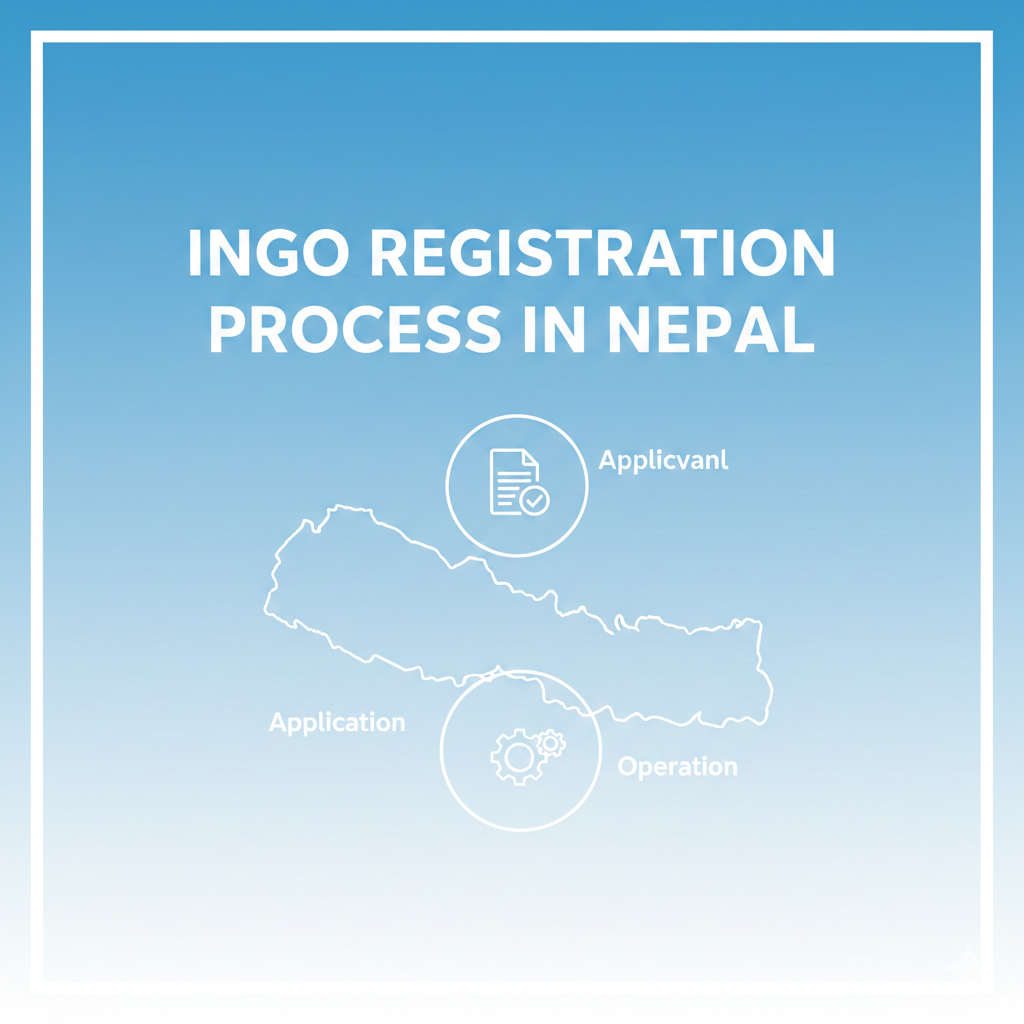
INGO Registration Process in Nepal
12
Dec
Introduction: Understanding INGO Registration in Nepal
The INGO approval and registration process in Nepal is governed by specific legal frameworks that must be carefully navigated by international organizations wishing to operate in the country. Nepal's regulatory environment for non-governmental organizations has evolved significantly over the years, with the Social Welfare Council (SWC) serving as the primary regulatory body. For international non-governmental organizations (INGOs), compliance with these regulations is not merely a formality but a legal requirement that enables legitimate operations within Nepal's jurisdiction. This comprehensive guide is designed to walk through every aspect of the INGO registration process in Nepal, from initial application to final approval, addressing common challenges and providing practical insights based on current regulations.
Legal Framework for INGOs in Nepal
The INGO approval and registration process in Nepal is primarily regulated by the Social Welfare Act, 2049 (1992) and the Social Welfare Regulations, 2050 (1993). These legal provisions establish the framework under which all non-governmental organizations, both domestic and international, must operate. The Social Welfare Council (SWC), established under these regulations, functions as the apex body for monitoring and regulating NGO activities in Nepal.
Additionally, the INGO registration Nepal requirements are influenced by other relevant legislation including the Association Registration Act, 2034 (1977), the Foreign Contribution (Regulation) Act, 2076 (2019), and various sector-specific regulations that may apply depending on the organization's focus area. These laws collectively ensure transparency, accountability, and alignment with national development priorities.
Key Regulatory Bodies
The Social Welfare Council (SWC) serves as the central authority for INGO approval in Nepal. Established in 1992, the Council operates under the Ministry of Women, Children and Senior Citizens and is responsible for:
- Reviewing and approving INGO applications
- Monitoring INGO activities throughout Nepal
- Facilitating coordination between INGOs and government agencies
- Ensuring compliance with national laws and regulations
Other relevant authorities include the District Administration Offices (DAOs), the Company Registrar's Office (for INGOs registered as companies), and various line ministries depending on the sector of operation.
Step-by-Step INGO Registration Process in Nepal
The INGO approval and registration process in Nepal involves multiple steps that must be completed sequentially. Each stage requires specific documentation and adherence to procedural formalities.
1. Pre-Registration Requirements
Before initiating the formal INGO registration Nepal process, organizations must ensure they meet the following prerequisites:
- Legal existence in the home country for at least two years
- Clear organizational mandate and objectives aligned with Nepal's development needs
- Sufficient financial resources to support proposed activities
- No history of involvement in activities contrary to Nepal's national interests
2. Document Preparation
A comprehensive set of documents must be prepared for submission to the Social Welfare Council. The following table outlines the essential documentation required:
| Document | Description | Additional Notes |
|---|---|---|
| Application Form | Prescribed format from SWC | Must be signed by authorized representative |
| Recommendation Letter | From concerned ministry/department | Sector-specific alignment must be demonstrated |
| Organization's Charter | Legal document of the organization | Must be translated into English if in another language |
| Annual Reports | Last two years of operation | Demonstrates organizational capacity |
| Work Plan & Budget | For proposed Nepal operations | Minimum one-year plan required |
| Personnel Information | Details of key personnel | Including CVs and qualifications |
| Financial Statements | Audited accounts for last two years | Demonstrates financial stability |
3. Submission and Initial Review
Once all documents are prepared, they must be submitted to the Social Welfare Council. The initial review process typically takes 15-30 days, during which the completeness of the application is verified. Any deficiencies must be addressed before the application proceeds to the next stage.
4. Technical Review and Inter-Ministerial Consultation
The INGO approval process in Nepal includes a technical review where the proposed activities are assessed for relevance, feasibility, and alignment with national priorities. The SWC may consult with relevant line ministries during this stage, which can extend the review period by 30-60 days.
5. Approval and Agreement Signing
Upon successful completion of all reviews, the SWC issues a letter of approval, and a General Agreement is signed between the INGO and the Council. This agreement outlines the terms and conditions of operation, reporting requirements, and other compliance obligations.
Timeline for INGO Registration in Nepal
The complete INGO approval and registration process in Nepal typically takes between 3-6 months, depending on various factors including:
- Completeness of application
- Sector of operation
- Current political climate
- Volume of applications being processed
The following timeline provides a general overview of the process:
| Stage | Duration | Notes |
|---|---|---|
| Document Preparation | 1-2 months | Dependent on organization's efficiency |
| Initial Review | 15-30 days | May extend if documents are incomplete |
| Technical Review | 30-60 days | Includes inter-ministerial consultations |
| Final Approval | 15-30 days | After all reviews are completed |
Post-Registration Compliance Requirements
Once the INGO registration Nepal process is completed, organizations must adhere to ongoing compliance requirements to maintain their legal status. These include:
- Submission of annual work plans and budgets
- Quarterly progress reports
- Annual financial statements audited by a certified auditor
- Renewal of registration every five years
- Prior approval for significant changes in programs or budget
Additionally, INGOs must comply with all applicable local laws, including labor regulations, tax obligations, and sector-specific requirements.
Common Challenges in the INGO Registration Process
Despite the clear procedural framework, several challenges are commonly encountered during the INGO approval and registration process in Nepal:
-
Lengthy Processing Times: Bureaucratic delays can extend the registration timeline significantly.
-
Frequent Policy Changes: The regulatory environment for INGOs has undergone several changes in recent years, creating uncertainty.
-
Sector-Specific Restrictions: Certain sectors, particularly those deemed politically sensitive, face additional scrutiny.
-
Documentation Requirements: The extensive documentation needed can be challenging to compile, especially for new organizations.
-
Coordination with Multiple Agencies: In some cases, approval from multiple government agencies may be required.
Strategies for Successful INGO Registration
To navigate the INGO approval and registration process in Nepal effectively, organizations should consider the following strategies:
-
Local Partnership: Collaborating with established local NGOs can facilitate the process.
-
Professional Assistance: Engaging legal consultants with expertise in Nepal's NGO sector can streamline the application.
-
Early Engagement: Proactive communication with the SWC and relevant ministries can help identify and address potential issues early.
-
Thorough Preparation: Ensuring all documentation is complete and accurate before submission can prevent delays.
-
Alignment with National Priorities: Demonstrating clear alignment with Nepal's development priorities increases the likelihood of approval.
Frequently Asked Questions (FAQs)
1. What is the minimum duration for which an INGO must be established in its home country before applying for registration in Nepal?
An INGO must be legally established and operational in its home country for at least two years before applying for registration in Nepal. This requirement is intended to ensure that the organization has a proven track record and stable operations before expanding to Nepal.
2. Can an INGO operate in Nepal without registration?
No, it is illegal for any international non-governmental organization to operate in Nepal without proper registration with the Social Welfare Council. Unregistered operations may result in penalties, including fines and deportation of personnel.
3. Is there a limit on the duration of INGO registration in Nepal?
Initially, INGO registration is granted for a period of five years. After this period, the registration must be renewed through a process that involves submission of performance reports and a review of the organization's activities in Nepal.
4. Can an INGO modify its program areas after registration?
Yes, but any significant changes to program areas require prior approval from the Social Welfare Council. The INGO must submit a detailed proposal outlining the rationale for the change and the intended new activities.
5. What happens if an INGO's registration application is rejected?
If an application is rejected, the Social Welfare Council provides reasons for the decision. The organization may address the identified issues and reapply after a specified period, typically six months.
6. Are there any financial requirements for INGO registration in Nepal?
While there is no specific minimum financial requirement, INGOs must demonstrate sufficient financial resources to implement their proposed programs in Nepal. This is typically assessed through the submission of audited financial statements and a detailed budget for Nepal operations.
7. Can foreign nationals be employed by registered INGOs in Nepal?
Yes, registered INGOs can employ foreign nationals, but they must obtain proper work permits and visas as per Nepal's immigration regulations. There are also limits on the number of foreign employees relative to local staff.
Conclusion
The INGO approval and registration process in Nepal is a comprehensive procedure designed to ensure that international organizations operate in alignment with national priorities and legal requirements. While the process can be complex and time-consuming, proper preparation and understanding of the regulatory framework can significantly streamline the journey to successful registration.
For organizations seeking to establish operations in Nepal, it is recommended to engage professional legal assistance with specific expertise in Nepal's NGO sector. This can help navigate potential challenges and ensure compliance with all regulatory requirements.
Call to Action: If you are planning to register an INGO in Nepal and require professional assistance with the process, our legal team specializes in NGO registration and compliance. Contact us today for a consultation to ensure a smooth and successful registration process.
References
- Social Welfare Council, Nepal. (2023). "Guidelines for International NGOs." Retrieved from https://swc.org.np
- Ministry of Women, Children and Senior Citizens, Nepal. (2022). "Social Welfare Act, 2049 (1992)."
- NGO Federation of Nepal. (2023). "Legal Framework for NGOs in Nepal." Retrieved from https://ngofed.org
- United Nations, Nepal. (2022). "Working with NGOs in Nepal: A Guide for International Organizations."
- Asian Development Bank. (2021). "Civil Society Organizations in Nepal: Operational Guidelines."
- International Center for Not-for-Profit Law. (2022). "NGO Law Monitor: Nepal." Retrieved from https://www.icnl.org
- World Bank. (2020). "Nepal Partnerships with Civil Society Organizations." Retrieved from https://www.worldbank.org