- [email protected]
- Anamnagar Kathmandu

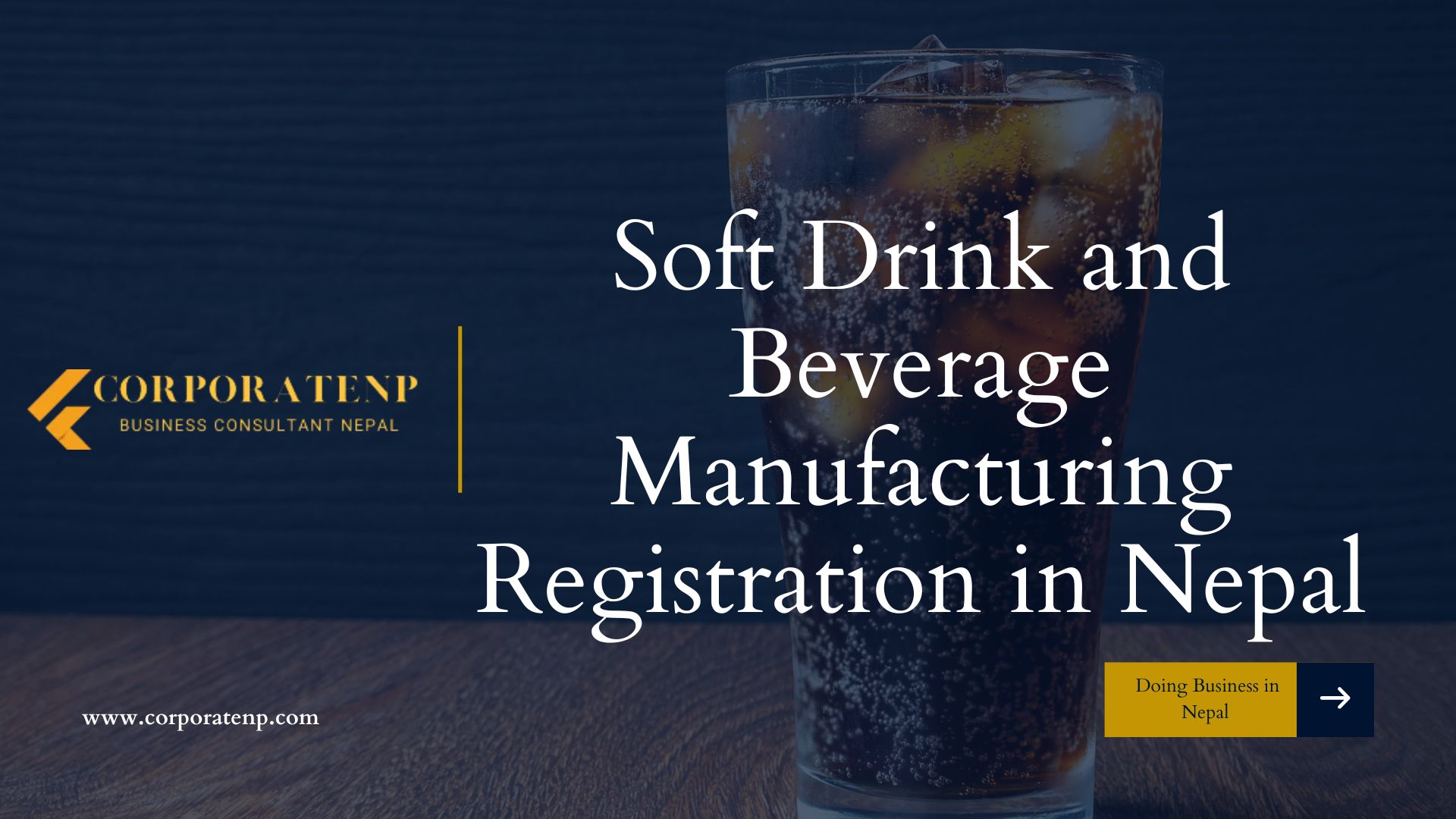
Soft Drink and Beverage Manufacturing Registration in Nepal
24
Jun
Soft drink and beverage manufacturing registration in Nepal is governed by multiple statutes that must be understood before any application is filed. Nepal's beverage market has expanded significantly with rising disposable incomes, urbanization, and tourism growth. Many entrepreneurs are drawn to this sector by high demand and brand loyalty potential, yet remain unaware of the stringent food safety, excise duty, and quality control requirements that apply to carbonated drinks, juices, energy drinks, and bottled beverages. This guide has been prepared to answer every question that is commonly asked about starting a soft drink and beverage manufacturing business in Nepal.
The legal framework for soft drink and beverage manufacturing registration in Nepal is found in the Companies Act 2063, the Food Act 2023, the Excise Duty Act 2058, and various standards issued by the Department of Food Technology and Quality Control and the Inland Revenue Department. Additionally, the Nepal Bureau of Standards and Metrology enforces beverage quality standards, while the Department of Industry oversees manufacturing incentives and industrial registration.
What Is a Soft Drink and Beverage Manufacturing Company in Nepal?
A soft drink and beverage manufacturing company in Nepal is a corporate entity engaged in the production, packaging, and distribution of non-alcoholic beverages for human consumption. This includes carbonated soft drinks, fruit juices and nectars, bottled water, energy and sports drinks, ready-to-drink tea and coffee, flavored milk, and traditional beverages. Such companies may operate as private limited companies or public limited companies depending on scale and capital requirements.
Furthermore, the sector is classified into several categories: carbonated beverages using CO2 injection; still beverages including juices, nectars, and flavored waters; functional beverages with added vitamins, minerals, or stimulants; dairy-based beverages; and traditional or herbal beverages. Each category has distinct formulation requirements, processing standards, and labeling obligations.
Legal Framework for Soft Drink and Beverage Manufacturing Registration in Nepal
The following laws and regulations govern soft drink and beverage manufacturing registration in Nepal:
| Legislation | Year | Relevance to Beverage Companies |
|---|---|---|
| Companies Act | 2063 (2006) | Governs incorporation and corporate management |
| Food Act | 2023 | Governs beverage safety and quality |
| Food Regulations | 2023 | Detailed licensing and hygiene requirements |
| Excise Duty Act | 2058 (2002) | Excise tax on carbonated and sugary beverages |
| Excise Duty Regulations | 2059 (2003) | Excise collection and compliance procedures |
| Industrial Enterprises Act | 2076 (2020) | Industry classification and tax incentives |
| Environmental Protection Act | 2076 (2019) | Effluent and waste management |
| Value Added Tax Act | 2052 (1996) | Tax on beverages at 13% |
| Foreign Investment and Technology Transfer Act | 2075 (2019) | Governs foreign participation |
| Nepal Bureau of Standards and Metrology Act | 2037 (1980) | Beverage quality standards |
| Nepal Standards | NS 138, NS 302 | Packaged water and food products |
| Caffeine and Additive Regulations | Various | Restrictions on stimulants and preservatives |
Types of Beverage Manufacturing Companies in Nepal
Beverage companies may be structured in several forms:
| Company Type | Description | Primary Regulator |
|---|---|---|
| Carbonated Soft Drink Manufacturer | Cola, lemon, orange, and flavored sodas | DFTQC, IRD |
| Fruit Juice and Nectar Manufacturer | Fresh, concentrated, and reconstituted juices | DFTQC |
| Energy Drink Manufacturer | Caffeinated and stimulant beverages | DFTQC, DDA |
| Bottled Water Company | Still and sparkling water | DFTQC, GWRDB |
| Flavored Milk Manufacturer | Dairy-based flavored drinks | DFTQC |
| Ready-to-Drink Tea/Coffee | Pre-packaged hot beverage alternatives | DFTQC |
| Traditional Beverage Manufacturer | Lassi, chaas, herbal drinks | DFTQC |
| Sports Drink Manufacturer | Electrolyte and hydration beverages | DFTQC |
| Syrup and Concentrate Producer | B2B supply for fountain and retail | DFTQC |
| Private Label Manufacturer | Contract production for retail brands | DFTQC |
Step-by-Step Process for Soft Drink and Beverage Manufacturing Registration in Nepal
The soft drink and beverage manufacturing registration in Nepal process involves multiple stages across different authorities.
Step 1: Product Formulation and Market Analysis
A comprehensive business plan must be prepared covering recipe development, ingredient sourcing, production capacity, and financial projections.
| Aspect | Planning Parameter |
|---|---|
| Beverage Category | Carbonated, juice, energy, water, dairy, or traditional |
| Formulation | Recipe, ingredient specifications, and batch sizes |
| Sweetener Type | Sugar, high-fructose corn syrup, or artificial alternatives |
| Preservative System | Chemical, natural, or aseptic processing |
| Packaging Format | PET bottles, glass bottles, cans, or Tetra Pak |
| Production Capacity | Bottles per minute or liters per hour |
| Target Market | Mass market, premium, health-conscious, or institutional |
| Shelf Life Target | 3-12 months depending on formulation and packaging |
Step 2: Water Source and Quality Assurance
Water is the primary ingredient in most beverages and must meet strict standards.
| Water Parameter | Standard |
|---|---|
| pH | 6.5-8.5 |
| Total Dissolved Solids | Maximum 500 mg/L |
| Hardness | Maximum 100 mg/L as CaCO3 for soft drinks |
| Chlorine Residual | Below detection for taste neutrality |
| Microbiological | Zero coliform per 100 mL |
| Heavy Metals | Below WHO/NS limits |
Step 3: Company Name Reservation at OCR
The proposed company name is reserved through the OCR e-Services Portal.
Step 4: Company Registration at OCR
The company is registered as a private limited or public limited entity. The MOA must specify beverage manufacturing, processing, and trading objectives.
| Document | Purpose |
|---|---|
| MOA and AOA | Constitutional documents |
| Promoter Identification | Citizenship or passport copies |
| Registered Office Proof | Factory lease or ownership |
| Capital Deposit Proof | Bank deposit certificate |
| PAN Application | Tax registration initiation |
Step 5: PAN and VAT Registration at IRD
Permanent Account Number registration is completed at the Inland Revenue Department. VAT registration is mandatory as beverages are subject to 13% VAT.
Step 6: Excise Registration
Carbonated and sugary beverages are subject to excise duty. Excise registration is mandatory before production commencement.
| Excise Requirement | Details |
|---|---|
| Excise License Application | Formal request to IRD Excise Department |
| Factory Premises Verification | Security and control measures |
| Production Capacity Declaration | Maximum daily and annual output |
| Bonded Warehouse (if applicable) | Duty-suspended storage for export |
| Excise Stamp Account | Trackable revenue stamp system |
| Monthly Excise Return | Production and duty payment reporting |
Step 7: DFTQC Food Industry License Application
The Department of Food Technology and Quality Control license is mandatory for all beverage manufacturing.
| Document | Purpose |
|---|---|
| Food Industry License Application | Formal request to DFTQC |
| Company Registration Certificate | Legal entity proof |
| Water Source and Quality Report | Potability and treatment documentation |
| Product Formulation | Complete ingredient list with percentages |
| Manufacturing Process Flow | From raw material to finished product |
| Equipment List | Mixing, processing, filling, and packaging machinery |
| Packaging Material Details | Food-grade certification for bottles, caps, labels |
| Label Design Draft | Compliance with food labeling regulations |
| Shelf Life Study | Accelerated and real-time stability testing |
| Hygiene and Sanitation Plan | CIP systems, cleaning protocols, pest control |
| Employee Health Certificates | Medical fitness of food handlers |
| HACCP Plan | Hazard analysis for beverage safety |
| Quality Control Laboratory | In-house or contracted testing capability |
| Traceability System | Batch coding and recall procedures |
Step 8: DFTQC Inspection and Approval
DFTQC officials conduct a site inspection to verify:
| Inspection Aspect | Standard |
|---|---|
| Water Treatment | Adequate filtration, softening, and disinfection |
| Syrup Preparation | Accurate dosing and mixing systems |
| Carbonation (if applicable) | CO2 injection and pressure control |
| Filling Operation | Aseptic or clean-fill technology |
| Bottle Washing | Multi-stage washing and sanitization |
| Capping Integrity | Tamper-evident and leak-proof seals |
| Pasteurization (if applicable) | Time-temperature validation |
| Cold Chain Maintenance | Post-fill cooling and storage |
| Labeling Accuracy | Ingredient, nutritional, and allergen declarations |
| Coding and Traceability | Legible batch and expiry codes |
| Laboratory Capability | Microbiological, chemical, and sensory testing |
| Waste Management | Effluent treatment and solid waste disposal |
Step 9: NBSM Quality Certification
Beverages must comply with Nepal Standards:
| Standard | Specification |
|---|---|
| NS 138 | Packaged drinking water |
| NS 302 | General food safety requirements |
| NS 400 | Fruit juice and nectar specifications |
| NS 401 | Carbonated beverage standards |
| NS 402 | Energy drink restrictions |
| Codex Stan 192 | Food additive general standard |
| Codex Stan 247 | Fruit juices and nectars |
Step 10: Industry Registration at DOI
Beverage manufacturing companies should register at the Department of Industry.
| Incentive | Benefit |
|---|---|
| Income Tax Exemption | 100% for 5 years, 50% for next 3 years |
| Customs Duty Concession | On imported processing and packaging equipment |
| VAT Exemption | On imported capital goods |
| Subsidized Loans | From designated development banks |
| Technical Support | Free extension services from DOI |
Step 11: Additional Registrations
| Registration | Authority | When Required |
|---|---|---|
| Municipal Operation Permit | Local Municipality | All operations |
| Fire Safety Clearance | Fire Department | For processing and storage facilities |
| Environmental Clearance | MoFE | For large-scale effluent generation |
| Trademark Registration | DOI | For brand name protection |
| Barcode Registration | GS1 Nepal | For retail product identification |
| Import License for Ingredients | Customs/DOI | For imported flavors, concentrates, or additives |
| Export Registration | TEPC/Customs | For international sales |
Excise Duty on Beverages in Nepal
Excise duty is a significant cost component for beverage manufacturers:
| Beverage Category | Excise Rate | Basis |
|---|---|---|
| Carbonated Soft Drinks | As prescribed by IRD | Per liter or ad valorem |
| Energy Drinks | Higher rate than standard soft drinks | Per liter or ad valorem |
| Sugary Beverages | Potential additional health levy | Under policy consideration |
| Fruit Juices | Exempt or concessional | Depending on fruit content |
| Bottled Water | Exempt | Non-carbonated, non-sweetened |
| Traditional Beverages | Exempt | Lassi, chaas, herbal drinks |
Tax Obligations for Beverage Manufacturing Companies
Beverage companies are subject to the following taxes:
| Tax Type | Rate | Applicability |
|---|---|---|
| Corporate Income Tax | 25% | Standard rate |
| Corporate Income Tax (Special Industry) | 20% | If registered as special industry |
| VAT | 13% | On beverage products |
| Excise Duty | Variable | On carbonated and sugary beverages |
| TDS on Raw Material Purchase | 1.5% | On payments to suppliers |
| TDS on Employee Salaries | Progressive | As per Income Tax Act |
| Customs Duty | Varies | On imported ingredients and machinery |
| Social Security Contribution | 31% total | Employer and employee shares |
Government Fees for Beverage Manufacturing Registration
| Fee Type | Amount (NPR) | Authority |
|---|---|---|
| Company Registration Fee | 1,000-3,000+ | OCR |
| DFTQC License Fee | 10,000-50,000 | DFTQC |
| DFTQC License Renewal | 5,000-25,000 | DFTQC (annual) |
| Excise License | 25,000-100,000 | IRD |
| PAN Registration | Free | IRD |
| VAT Registration | Free | IRD |
| Industry Registration | 1,000-5,000 | DOI |
| NBSM Certification | 10,000-50,000 | NBSM |
| Municipal Permit | 2,000-10,000 | Local Body |
| Fire Safety Clearance | 5,000-20,000 | Fire Department |
| Environmental Clearance | Varies | MoFE |
| Trademark Registration | 5,000-15,000 | DOI |
Timeline for Soft Drink and Beverage Manufacturing Registration Nepal
| Stage | Duration |
|---|---|
| Product Formulation and Market Analysis | 3-6 weeks |
| Company Registration | 1-2 weeks |
| PAN/VAT Registration | 3-5 days |
| Excise Registration | 2-4 weeks |
| DFTQC Application Preparation | 2-4 weeks |
| DFTQC Inspection and Approval | 4-8 weeks |
| NBSM Certification | 2-4 weeks |
| DOI Industry Registration | 1-2 weeks |
| Additional Registrations | 1-2 weeks |
| Total Timeline | 4-7 months |
Post-Registration Compliance for Beverage Companies
After soft drink and beverage manufacturing registration in Nepal is completed, ongoing compliance is mandatory:
| Compliance | Frequency | Authority |
|---|---|---|
| DFTQC License Renewal | Annual | DFTQC |
| Excise Return Filing | Monthly | IRD |
| Excise Duty Payment | Monthly | IRD |
| Production Reporting | Monthly | IRD/DFTQC |
| Tax Return Filing | Annual | IRD |
| VAT Return Filing | Monthly/Bi-monthly | IRD |
| TDS Returns | Monthly | IRD |
| Annual Return Filing | Annual | OCR |
| DOI Reporting | Annual | DOI |
| NBSM Quality Audit | Periodic | NBSM |
| Environmental Monitoring | Quarterly | MoFE |
| Product Recall Readiness | Continuous | Internal |
Foreign Investment in Beverage Companies
Foreign participation in soft drink and beverage manufacturing registration in Nepal is permitted subject to conditions:
| Aspect | Requirement |
|---|---|
| Foreign Ownership | Up to 100% in manufacturing |
| FDI Approval | Required from DOI or IBN |
| Minimum Investment | NPR 20 million (general) |
| Technology Transfer | Permitted for formulation and processing technology |
| Repatriation | Allowed after tax clearance and NRB approval |
| Excise Compliance | Same obligations as domestic producers |
Frequently Asked Questions
What is soft drink and beverage manufacturing registration in Nepal?
Soft drink and beverage manufacturing registration in Nepal is the process of establishing a legally compliant corporate entity for the production of non-alcoholic beverages, including obtaining DFTQC food industry license, excise registration, and quality certification.
Is excise registration mandatory for all beverages?
Excise registration is mandatory for carbonated soft drinks and energy drinks. Non-carbonated juices, bottled water, and traditional beverages are generally exempt from excise duty.
What is the minimum investment for a beverage manufacturing company?
For a private limited company, the minimum paid-up capital is NPR 1,00,000. Practical investment in processing plant, filling line, and initial operations typically ranges from NPR 1 crore to 10 crore depending on capacity and automation.
How long does beverage manufacturing registration take?
The complete process including company registration, excise licensing, DFTQC approval, and other permits typically takes 4 to 7 months.
What taxes apply to soft drinks and beverages?
Beverages are subject to 13% VAT. Carbonated drinks additionally attract excise duty. Corporate income tax is 25% generally, or 20% if registered as a special industry.
Can foreigners invest in beverage companies in Nepal?
Yes, foreigners can invest in beverage manufacturing companies. Most sectors allow 100% foreign ownership. FDI approval from DOI is required with minimum investment of NPR 20 million generally.
What quality standards must beverages meet?
Beverages must comply with DFTQC food safety standards, NS 400 for juices, NS 401 for carbonated drinks, and general food hygiene requirements. Energy drinks face additional caffeine and stimulant restrictions.
Are government subsidies available for beverage manufacturers?
Registered beverage companies can avail income tax exemptions for 5 years, customs duty concessions on imported equipment, VAT exemptions on capital goods, and subsidized loans from development banks.
What labeling requirements apply to beverages?
Labels must include product name, ingredient list, nutritional information, allergen warnings, batch number, manufacturing and expiry dates, manufacturer details, and net content. Health claims require substantiation.
Can beverages be exported from Nepal?
Yes, beverages can be exported. Export requires compliance with destination country food safety standards, labeling requirements, and customs documentation. Excise drawback may be available for exported goods.
Why Choose CorporateNp for Soft Drink and Beverage Manufacturing Registration Nepal?
Soft drink and beverage manufacturing registration in Nepal involves navigating food safety regulations, excise compliance, formulation standards, quality certification, and complex documentation. CorporateNp provides comprehensive advisory and execution services to ensure your beverage company is registered smoothly and operates in full compliance.
Our services include:
- Product formulation and recipe development advisory
- Water source assessment and treatment design
- Company registration at OCR
- Excise license application and compliance setup
- DFTQC food industry license application
- HACCP system implementation
- PAN, VAT, and tax registration
- Industry registration at DOI for incentives
- NBSM quality certification support
- Municipal and environmental licensing
- Trademark and brand protection
- Export documentation and compliance
- Ongoing regulatory and quality advisory
Contact CorporateNp today to begin your soft drink and beverage manufacturing registration in Nepal journey with confidence.
References
For official verification and further reading, the following authoritative sources are referenced:
- Department of Food Technology and Quality Control - Beverage licensing and food safety
- Inland Revenue Department Nepal - Excise registration and tax compliance
- Office of Company Registrar Nepal - Company registration
- Department of Industry Nepal - Industry registration and incentives
- Nepal Bureau of Standards and Metrology - Beverage quality standards
- Ministry of Forests and Environment - Environmental clearance
- Ministry of Finance Nepal - Tax and excise policy
- Ministry of Health and Population - Food safety policy
- Groundwater Resources Development Board - Water source permits
- Nepal Beverage Association - Industry coordination
- Codex Alimentarius - International food standards
- International Council of Beverages Associations - Global industry standards
Disclaimer: This article is provided solely for informational and educational purposes. It does not constitute legal advice, professional counsel, or solicitation. The information presented herein is based on laws and regulations as of June 2026 and may be subject to change. Readers are advised to consult qualified legal professionals before making any decisions related to soft drink and beverage manufacturing registration in Nepal. CorporateNp and its affiliates shall not be held liable for any actions taken based on the contents of this guide.